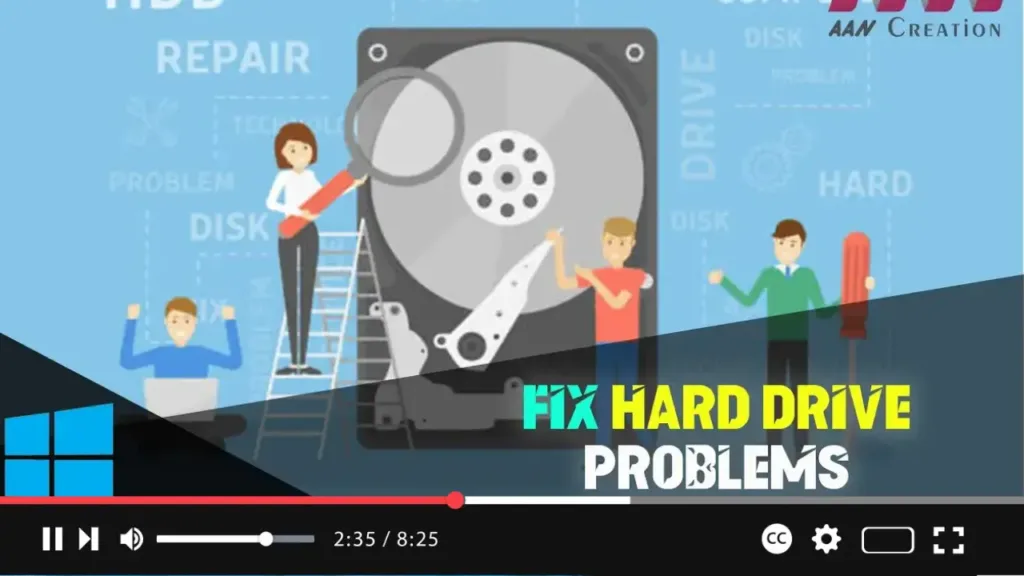

Hard drive problems can manifest in various ways, including slow performance, read/write errors, and system crashes. Fixing these issues is crucial to ensure data integrity and the smooth operation of your Windows 10 system. This guide will walk you through the steps to diagnose and fix hard drive problems.
Introduction
Hard drive problems can be caused by software issues, file system errors, bad sectors, or physical damage. Windows 10 provides several tools to diagnose and fix these issues, from built-in utilities to advanced third-party software.
Steps to Fix Hard Drive Problems on Windows 10
Step 01: Check Disk for Errors
Windows 10 includes a built-in utility called Check Disk (chkdsk) that can scan your hard drive for errors and fix them.
- Open Command Prompt as Administrator: Press
Windows key + Xand select “Command Prompt (Admin)” or “Windows PowerShell (Admin).” - Type
chkdsk C: /f /rand press Enter. ReplaceC:with the letter of the drive you want to check. - If prompted to schedule the scan at the next restart, type
Yand press Enter. - Restart your computer to let Check Disk run and fix any errors it finds.
.webp)
Step 02: Use the Disk Cleanup Utility
Disk Cleanup helps remove temporary files, system cache, and other unnecessary data that can slow down your hard drive.
- Press
Windows key + Sand typeDisk Cleanup. Select the Disk Cleanup app from the search results. - Choose the drive you want to clean (typically
C:) and click OK. - Select the file types you want to delete and click OK. For more options, click “Clean up system files.”
Step 03: Run the System File Checker
The System File Checker (sfc) scans and repairs corrupted system files that could be causing hard drive issues.
- Open Command Prompt as Administrator: Press
Windows key + Xand select “Command Prompt (Admin)” or “Windows PowerShell (Admin).” - Type
sfc /scannowand press Enter. - Wait for the scan to complete. If any corrupted files are found, they will be repaired automatically.
Step 04: Update Hard Drive Drivers
Outdated or corrupted drivers can cause hard drive problems. Make sure your hard drive drivers are up to date.
- Press
Windows key + Xand select “Device Manager.” - Expand the “Disk drives” category.
- Right-click your hard drive and select “Update driver.”
- Choose “Search automatically for updated driver software” and follow the prompts.
Step 05: Use Third-Party Software
For more advanced diagnostics and repairs, you can use third-party software such as:
- CrystalDiskInfo: Provides detailed information about the health and status of your hard drive.
- EaseUS Partition Master: Offers advanced disk management and repair tools.
- HD Tune: Can check for errors, monitor health status, and benchmark performance.
.webp)
Additional Information
Backup Important Data: Before performing any repairs, ensure you have a backup of important data. Some repair processes can result in data loss.
Check for Physical Damage: If you suspect physical damage (e.g., unusual noises, overheating), consider consulting a professional. Physical damage often requires professional repair or replacement.
Regular Maintenance: Regularly perform maintenance tasks such as disk cleanup, defragmentation (for HDDs), and driver updates to prevent future issues.
Troubleshooting
Persistent Errors: If hard drive errors persist, you might need to consider replacing the drive. Hard drives have a limited lifespan and can fail over time.
Data Recovery: If your hard drive is failing and you need to recover data, consider using data recovery software or professional data recovery services.
By following these steps, you can diagnose and fix many common hard drive problems on Windows 10, ensuring your system runs smoothly and your data remains safe.