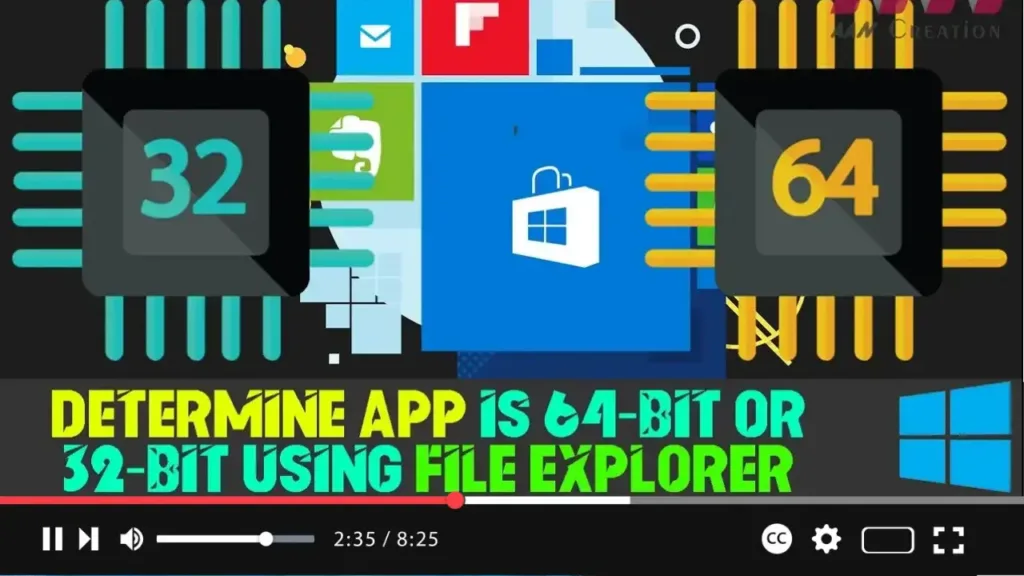

If you’re using a 64-bit version of Windows 10, you have the flexibility to run both 64-bit and 32-bit applications. However, for optimal performance, especially with demanding applications, you may prefer to use 64-bit versions whenever possible. 64-bit applications can access more than 4GB of memory, making them faster and more efficient compared to their 32-bit counterparts. This is particularly important for apps that benefit from accessing more memory, such as web browsers like Google Chrome or development tools like Visual Studio.
Windows 10 provides several ways to check if an app is 64-bit or 32-bit. One of the quickest methods is to use File Explorer. This guide will show you how to determine an app’s architecture using File Explorer on Windows 10.
Steps to Determine if an App is 64-bit or 32-bit Using File Explorer
Step 01: Open File Explorer
- Click on the File Explorer icon in the taskbar or press Windows + E on your keyboard to open File Explorer.
Step 02: Navigate to “This PC”
- In the left sidebar, click on This PC to access the main folders and drives on your computer.
Step 03: Open the C: Drive
- Under the Devices and drives section, double-click on the C: drive (or whichever drive you have Windows 10 installed on). This will open the main directory of your system drive.

Step 04: Check the “Program Files” Folders
- In the root directory of the C: drive, you will see two main folders for applications:
- Program Files: This folder contains all the 64-bit applications installed on your system.
- Program Files (x86): This folder contains all the 32-bit applications installed on your system.
Step 05: Determine the App’s Architecture
- To determine whether an app is 64-bit or 32-bit, check which of these two folders the application is installed in:
- If the app is installed in the Program Files folder, it is a 64-bit application.
- If the app is installed in the Program Files (x86) folder, it is a 32-bit application.
Why It Matters
- Performance Gains: 64-bit applications can handle larger amounts of RAM more effectively, which can result in better performance, especially in memory-intensive tasks.
- Compatibility: While 32-bit applications will run on a 64-bit version of Windows, they do not fully utilize the hardware capabilities, especially in systems with more than 4GB of RAM.
Additional Methods to Determine App Architecture
In addition to using File Explorer, you can also use other methods to check if an app is 64-bit or 32-bit:
-
Task Manager: Open Task Manager (Ctrl + Shift + Esc), go to the Details tab, and look under the Platform column. If it says 32-bit, the app is 32-bit; if the column is blank or says 64-bit, it’s a 64-bit app.
-
Properties of Executable File: Right-click the app’s executable file (usually with a
.exeextension) in File Explorer, select Properties, and check the Compatibility tab. If there is a checkbox for running in compatibility mode for previous versions of Windows, it’s likely a 32-bit app.
Conclusion
By following these simple steps, you can easily determine if an app is 64-bit or 32-bit using File Explorer on Windows 10. Knowing the architecture of your applications helps in optimizing performance and ensures that you’re making the most out of your system’s capabilities. Whenever possible, upgrade essential 32-bit apps to their 64-bit versions to benefit from better performance and efficiency.